
Blog
What Size Wall Art for an Open-Plan Living Room?

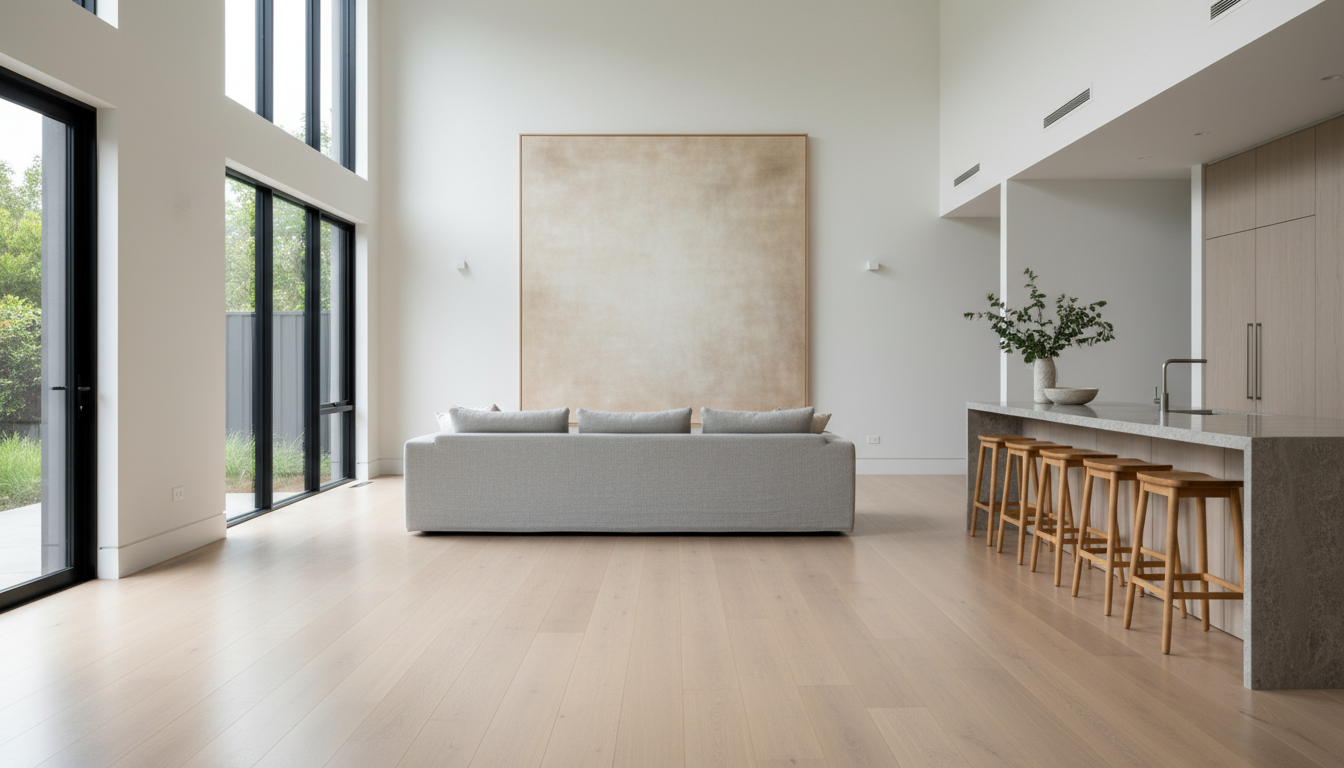
For a piece hung above furniture, aim for roughly two thirds the width of whatever sits beneath it. Above a standard three-seater sofa, around 180cm wide, that means a single piece of about 120cm. In open-plan rooms, where art is viewed from much further back, go up a size from whatever feels right on screen.
Undersized art is the most common mistake in Australian homes, and open-plan living makes it worse. Here is how to get the scale right before you buy.
The two thirds rule, and when to break it
The starting point is simple. Measure the furniture the art will hang above, and multiply by two thirds.
| Furniture beneath | Typical width | Target art width |
|---|---|---|
| Two-seater sofa | 150cm | 90cm to 105cm |
| Three-seater sofa | 180cm to 210cm | 120cm to 140cm |
| Four-seater or modular | 240cm and up | 160cm and up, or a pair |
| Sideboard or console | 120cm to 150cm | 80cm to 100cm |
| Queen bed head | 150cm | 90cm to 105cm |
| King bed head | 180cm | 120cm to 140cm |
Break the rule upward, never downward. A piece slightly too large reads as confident. A piece too small reads as an afterthought, and no amount of framing rescues it.
Why open-plan rooms need bigger art
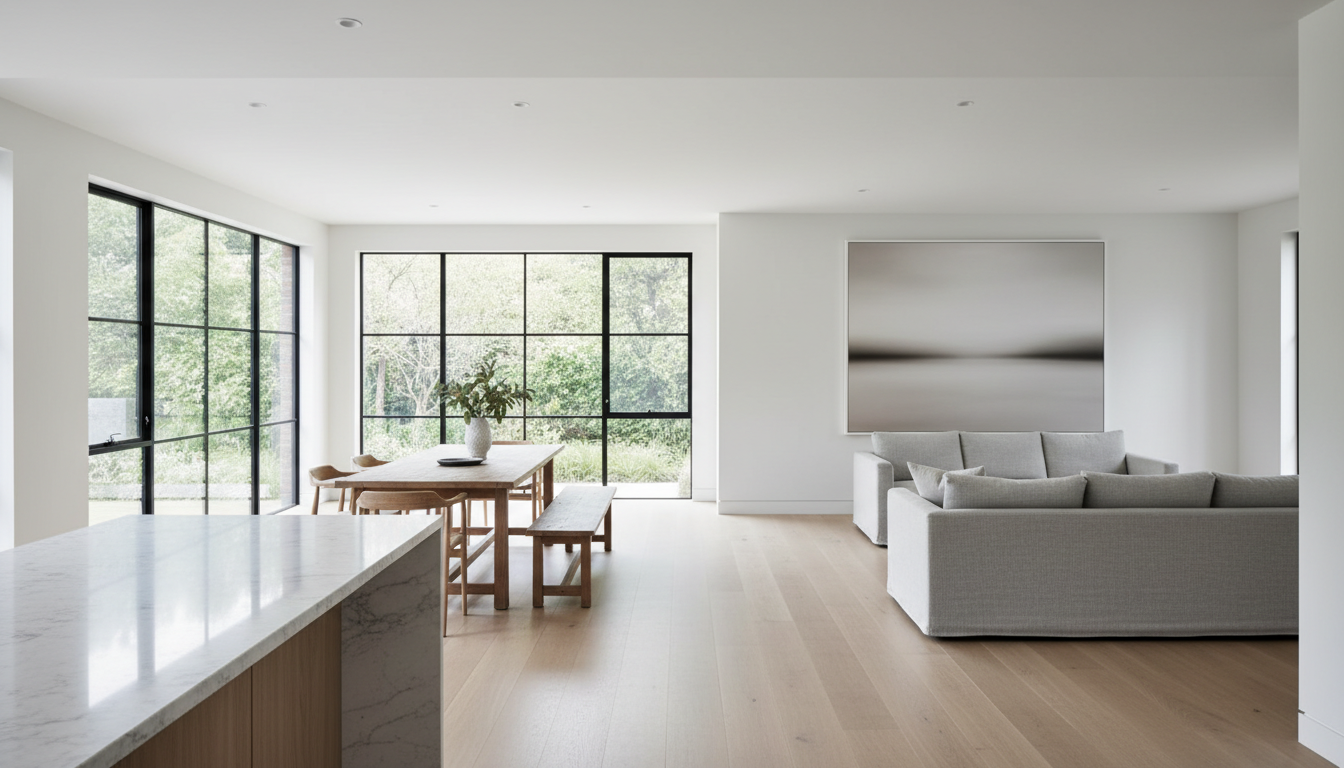
Most art is photographed in a room where the camera sits two or three metres from the wall. Australian open-plan living areas do not work like that. The kitchen bench, the dining table and the lounge often share one space, so the same painting gets seen from seven or eight metres away as you move through the room.
At that distance a 60cm canvas stops being a focal point and becomes a smudge of colour. The piece has to hold the wall from the far end of the room, not just from the sofa.
A practical way to test this: stand at the furthest point you would normally view the wall from, and hold up a sheet of newspaper or a cardboard box at the size you are considering. If it does not clearly read as an object from there, size up.
Viewing distance and minimum size
A rough guide that holds up well in practice.
- Viewed from 2m to 3m such as a hallway or small bedroom: 60cm to 90cm works.
- Viewed from 4m to 6m such as a standard living room: 100cm to 140cm.
- Viewed from 7m or more such as open-plan living and dining: 150cm and up, or a grouping that reads as one shape.
How high to hang it
Centre the piece at about 145cm to 150cm from the floor, measured to the middle of the artwork. That puts it at average standing eye level and is the height most galleries use.
Above furniture, leave a gap of 15cm to 25cm between the top of the sofa back and the bottom of the frame. Any more and the two stop reading as a pair.
We go into this properly in our guide to hanging height above a sofa.
One large piece or a group?
One large piece is easier to get right and calmer to live with. A group needs to work as a single shape, which means consistent spacing, usually 5cm to 8cm between pieces, and a shared palette or subject.
Groups suit long walls and stairwells. They struggle above a sofa, where they often end up looking like a compromise between two smaller pieces the buyer could not choose between.
If you are covering a wide wall on a budget, a pair of matching portrait canvases usually looks more considered than five mismatched small ones.
Ceiling height and orientation
Newer Australian builds often run 2.7m ceilings, which leaves more wall above furniture than older 2.4m homes. Taller rooms take portrait or square work comfortably. Standard 2.4m ceilings usually suit landscape orientation, which draws the eye sideways and makes the room feel wider.
For a narrow section of wall between windows or doors, a portrait piece keeps the proportion of the gap rather than fighting it.
Frequently asked questions
What size art should go above a three-seater sofa?
Around 120cm to 140cm wide for a sofa of 180cm to 210cm. That is roughly two thirds the width of the furniture. Hang it with 15cm to 25cm between the sofa back and the bottom of the piece.
How high should art be hung?
Centre it at 145cm to 150cm from the floor, measured to the middle of the artwork. Above furniture, the gap beneath matters more than the exact height.
Is it better to go too big or too small?
Too big. Oversized art reads as deliberate. Undersized art reads as unfinished, and it is the more common mistake by a wide margin.
What size art suits an open-plan living room?
150cm wide and up, because the piece is viewed from much further away than in a closed room. Test it by standing at the furthest normal viewing point before you decide.
Should I choose one large piece or a gallery wall?
One large piece for above furniture. Gallery walls suit long hallways and stairwells, where you view them while moving past rather than sitting opposite.
Does ceiling height change what size I need?
Yes. Rooms with 2.7m ceilings carry portrait and square work well. Standard 2.4m rooms usually look better with landscape orientation.
Finding the right size
Our large and oversized wall art collection covers the sizes open-plan rooms need, and every piece is painted by hand to order, so size and orientation can be matched to your wall.
We photograph each finished piece and send it to you for approval before it ships, and shipping is free and fully insured across Australia and the United States.
