
Blog
Is Textured Wall Art Real Texture or Just a Print?

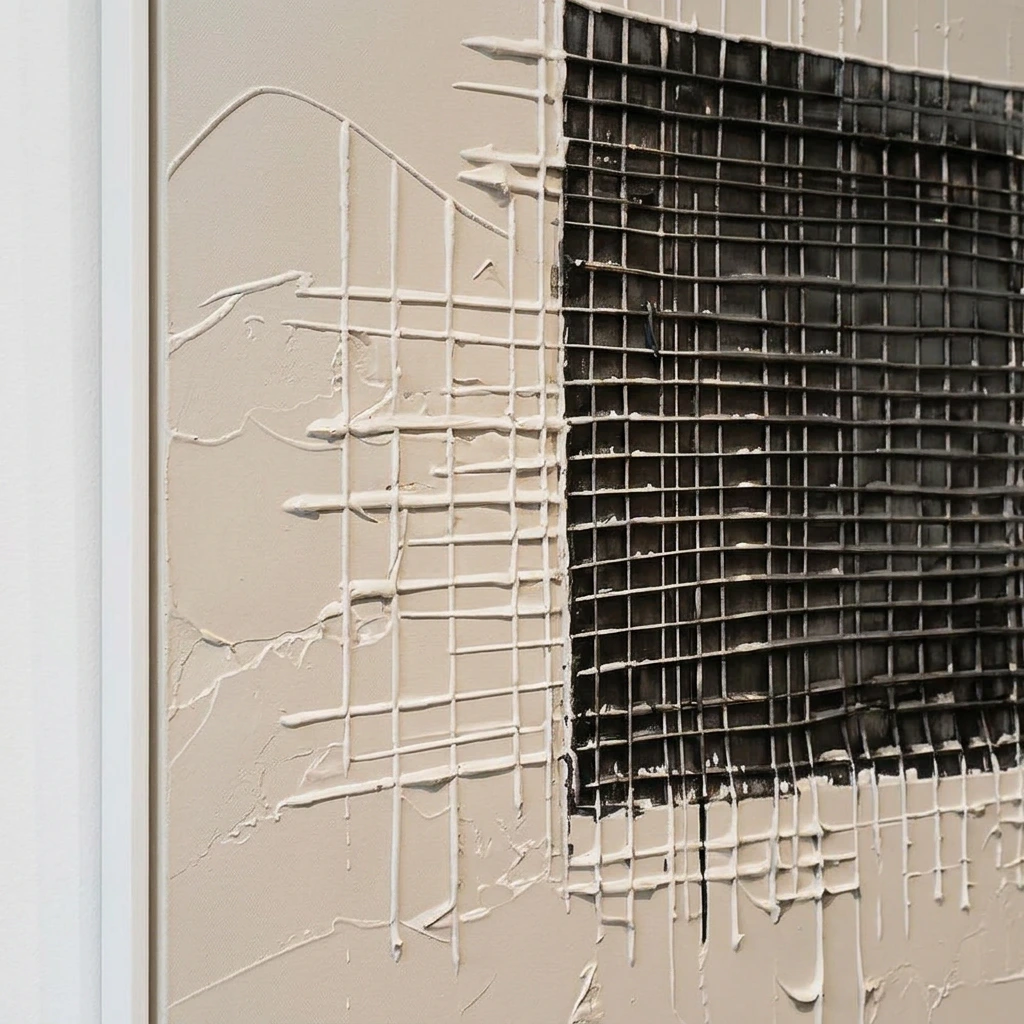
A lot of art sold as textured is a high-resolution photograph of texture printed onto canvas. You can usually tell from the listing alone. Ask for a photo lit from the side, check the canvas edges, look at whether the surface repeats, and search the image to see if it appears on other stores. Real relief casts shadows that move. A print cannot.
Textured wall art has become one of the most copied categories online. The look sells, and photographing a real textured painting costs almost nothing to reproduce. This guide covers how to check before you buy, and what the differences mean for what you pay.
Why printed texture is so common
A painting worked in plaster or heavy impasto takes days to build up and dry, and every piece comes out different. A print of that painting takes minutes and comes out identical every time.
Photographed straight on under soft, even light, the two look remarkably similar. The shadows that give texture its depth are already in the photograph, so a flat print carries a convincing illusion of relief.
The illusion collapses in person, and it collapses under any light that comes from the side.
Five checks you can do before buying
1. Ask for a raking light photo
This is the single most reliable test. Raking light means a light source low and to one side, skimming across the surface.
On a genuinely textured piece, every ridge throws a shadow, and those shadows change shape as the light moves. On a print, the surface stays flat and the only shadows are the ones already printed into the image.
Any seller with real texture can take this photo in thirty seconds. A refusal, or a reply that redirects you to the existing photos, tells you what you need to know.
2. Look at the edges of the canvas
On a hand-worked piece the medium builds up unevenly at the sides. It might wrap around, stop short, or leave a ridge where the knife ran out.
On a printed canvas the image either continues neatly around the edge, or the sides are blank white where the print stopped. Both are clean in a way hand-applied plaster never is.
3. Check whether the surface repeats
Printed canvases are often produced from one photograph tiled or mirrored to fill a larger format. Look for the same crack, the same knot of texture, appearing more than once in the piece, particularly across a horizontal or vertical centre line.
4. Reverse image search the listing photo
Save the main product image and run it through Google Images or Lens. If the same piece appears across several unrelated stores, sometimes flipped or recoloured, you are looking at stock artwork sold by many sellers rather than an original.
5. Read what the listing avoids saying
Listings for prints tend to describe the effect rather than the making. Phrases like textured finish, textured print, or the look of hand-painted texture are doing careful work. A piece that was actually painted by hand will usually say so plainly, and will say what it was painted with.
What the difference is worth
| Hand-textured original | Printed texture | |
|---|---|---|
| Surface | Physical relief you can feel | Flat, sometimes with a clear coat |
| Under side light | Shadows shift across the surface | Stays flat |
| Every piece | Differs | Identical |
| Production time | Days, made to order | Minutes, held in stock |
| Reasonable price | Reflects labour and materials | Should reflect a print |
There is nothing wrong with buying a print. Plenty of rooms are better served by one. The issue is paying for an original and receiving a photograph of one, which happens when listings use the language of handmade work for something that is not.
Does texture actually matter in a room?
It matters most where light moves. A textured piece on a wall that catches morning or late afternoon light changes through the day as the shadows lengthen and shorten. A print looks the same at every hour.
It also matters at close range. Texture rewards standing near the work, which is why it suits hallways, entries and dining rooms where people pass close to the wall.
In a room lit flatly from directly overhead, much of the benefit is lost, and a good print may be the more sensible purchase.
Frequently asked questions
How can I tell if textured wall art is real or printed?
Ask for a photograph lit from one side, low across the surface. Real texture casts shadows that shift. Printed texture stays flat. Also check the canvas edges and reverse image search the listing photo.
What is raking light?
Light placed low and to one side so it skims across a surface rather than hitting it straight on. It exaggerates relief and is the standard way to reveal texture in a photograph.
Is textured print art worth buying?
It can be, at print prices. The problem is paying original prices for a printed reproduction, which is why the checks above are worth doing before you buy.
Why do so many stores sell the same textured artwork?
Because printed canvases are produced from stock photographs that any seller can license. If the same image appears across unrelated stores, it is stock artwork rather than an original.
Can you feel the difference?
Yes, immediately. Hand-applied plaster or impasto has ridges, grit and uneven build-up. A printed canvas is flat under the hand, even when it looks convincing in a photograph.
Does textured art need special care?
Keep it out of direct sun and dust it with a dry soft brush rather than a cloth, which can catch on raised edges. It also needs more careful packing in transit than a flat print.
Seeing the difference for yourself
Every piece in our textured wall art collection is painted by hand to order and never printed. We photograph each finished piece, including under side light, and send it to you for approval before it ships.
For more tests, including what the back of a canvas tells you, see our guide on how to tell if a painting is hand-painted or a print.
