
Blog
What Is Wabi-Sabi Wall Art?

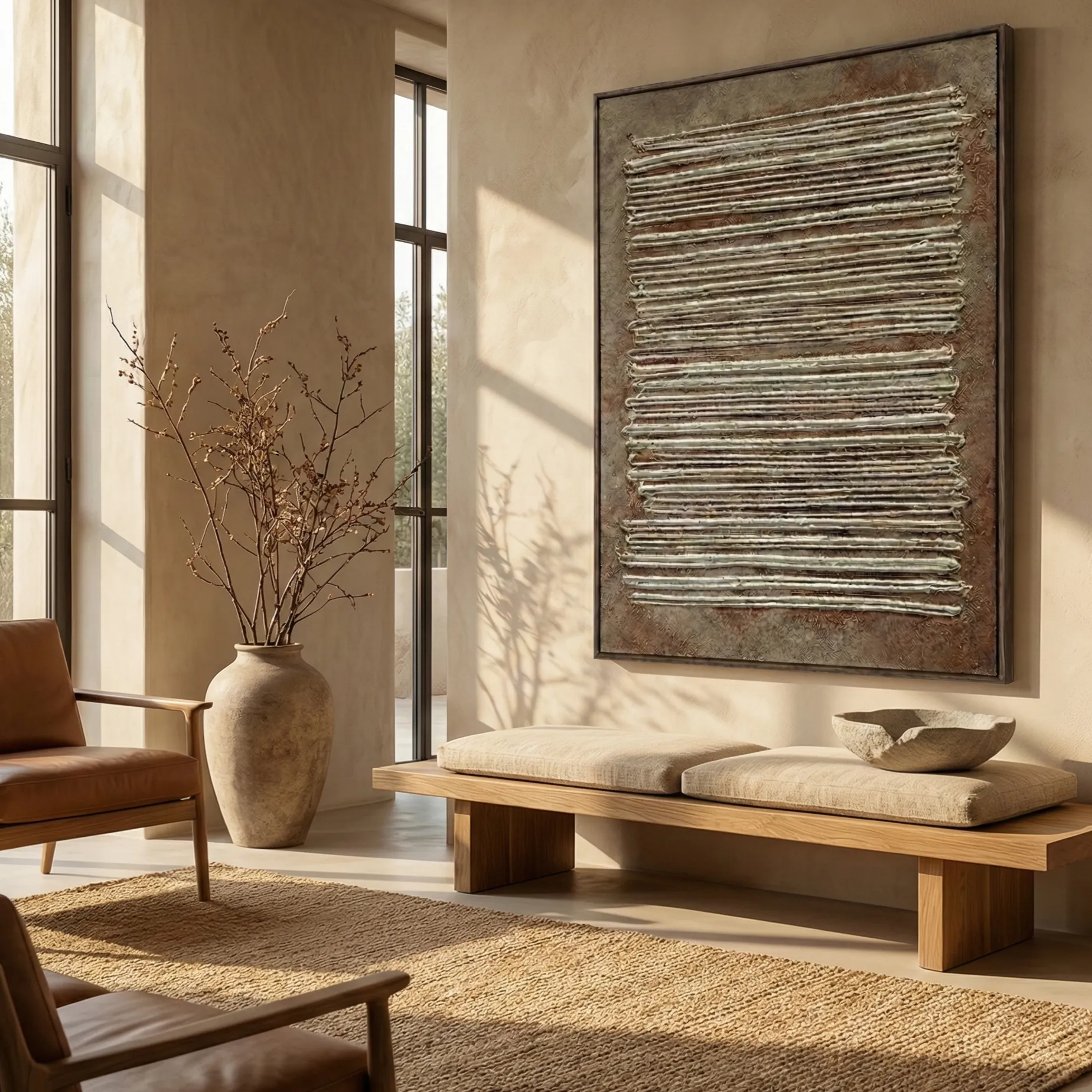
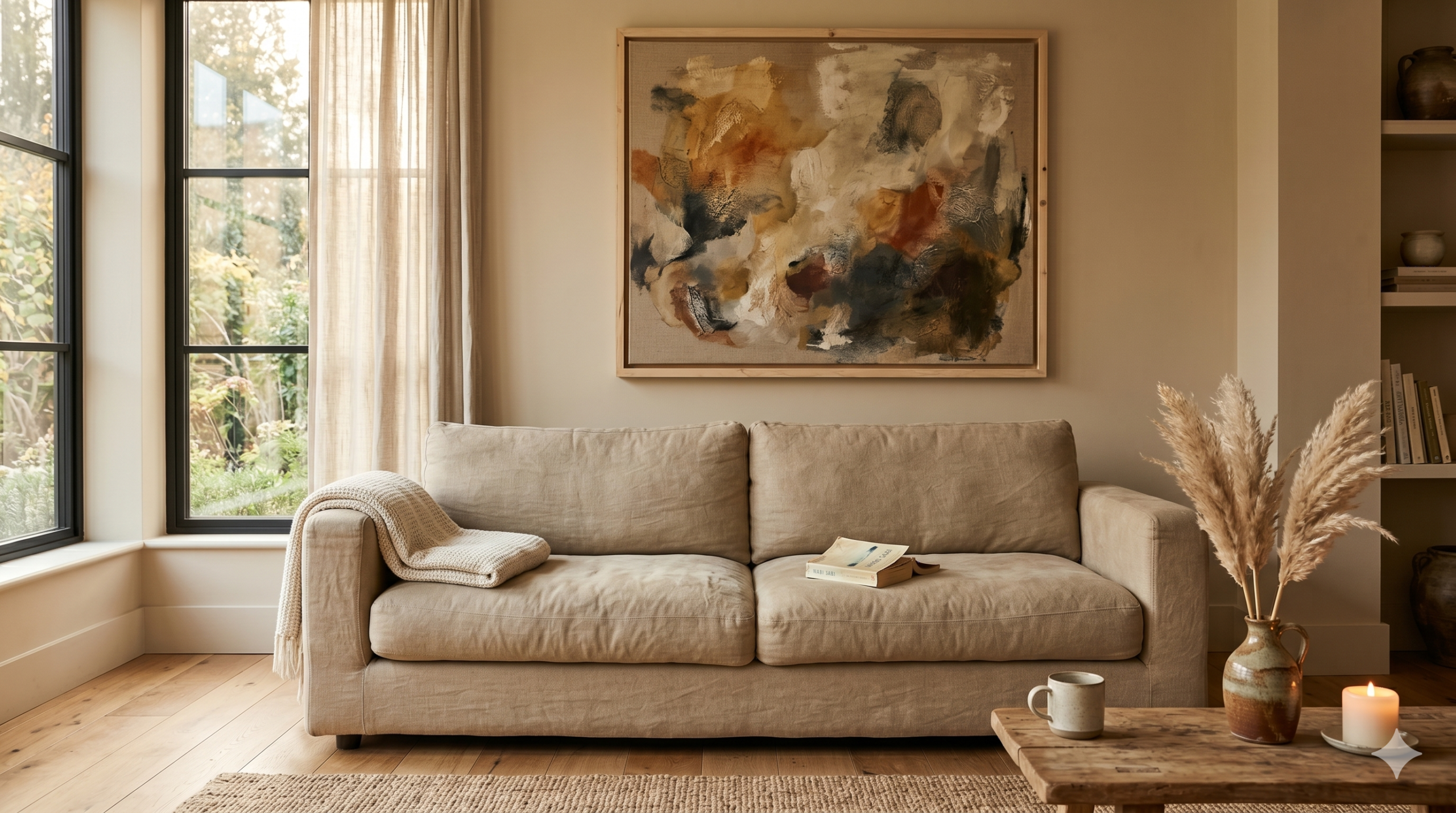
Wabi-sabi wall art is artwork built on the Japanese idea of finding beauty in imperfection and impermanence. In practice that means muted, natural colour, heavily textured surfaces, asymmetry, and a deliberate lack of polish — art that looks shaped by time rather than made by a machine. It is the signature style of Japandi and organic-modern interiors.
Wabi-sabi began as a Japanese aesthetic philosophy, not a decorating trend: the same thinking behind kintsugi pottery, where a broken bowl is repaired with gold rather than hidden, and behind raked stone gardens. What carries into wall art is the restraint, and the acceptance of surface irregularity as the point rather than the flaw.
In a world that often chases flawless perfection, the Japanese philosophy of wabi-sabi offers a refreshing retreat. Celebrating the beauty of the imperfect, impermanent, and incomplete, wabi-sabi has become a cornerstone of contemporary interior design. But how do you capture this serene philosophy on your walls? The answer lies in wabi-sabi art.
What makes a painting wabi-sabi?
Wabi-sabi art strips away the unnecessary, leaving behind raw emotion and organic beauty. Unlike hyper-polished prints, these pieces often feature asymmetrical compositions, muted earth tones, and visible brushstrokes. This minimalist approach doesn't mean the art is simple; rather, it invites the viewer to pause and find depth in subtlety.
Why does texture matter in wabi-sabi art?
One of the defining characteristics of this aesthetic is a heavy emphasis on texture. Textured art pieces—often created with impasto techniques, plaster, or mixed media—cast gentle, shifting shadows throughout the day. This tactile quality brings a dynamic, living element to a room, breaking up the flat surfaces of modern drywall and sleek furniture.
Wabi-sabi, Japandi and minimalism — what is the difference?
These three get used interchangeably and they are not the same thing.
| What it is | On a wall | |
|---|---|---|
| Minimalism | Reduction — as few elements as possible | Clean fields of colour, one line or shape, smooth surfaces |
| Japandi | A hybrid interior style: Japanese restraint plus Scandinavian warmth and function | Warm neutrals, natural timber, uncluttered but not cold |
| Wabi-sabi | A philosophy about imperfection and impermanence, older than either | Heavy texture, cracks and irregularity, asymmetry, weathered surfaces |
The short version: minimalism removes things, Japandi is a look, and wabi-sabi is a way of valuing what is already worn or imperfect. A minimalist painting can be flawless. A wabi-sabi one should not be.
How to tell real texture from a printed effect
A printed canvas can reproduce a photograph of texture, and an embossed print can press a pattern into the surface, but neither has depth. Hold a light at a low angle across a genuinely textured painting and the shadows move as you move; do the same to a print and nothing happens. That is the whole test. There is a longer guide to spotting the difference here.
Every piece in our wabi-sabi wall art collection is painted by hand to order — never printed. Neighbouring styles: textured wall art and minimalist wall art.
Where does wabi-sabi art work in a home?
Keep it uncluttered
Let the artwork breathe. Place a single, large textured canvas on a blank wall rather than crowding it with a gallery of smaller frames.
Let natural light across it
Position the artwork where natural light can sweep across its surface, highlighting its ridges and valleys.
Pair it with natural materials
Pair these canvases with natural materials like raw wood, linen, stone, and ceramics to complete the organic aesthetic.
More than a design choice
Adding a wabi-sabi piece to your collection is more than a design choice; it’s a lifestyle shift. It transforms a house into a sanctuary, reminding us to slow down and appreciate the beautiful imperfections of the natural world.
Frequently asked questions
What is wabi-sabi wall art?
Wabi-sabi wall art is artwork built on the Japanese idea of beauty in imperfection — muted natural colours, heavily textured surfaces, asymmetry and restraint. It is the signature style of Japandi and organic-modern interiors.
What colours is wabi-sabi art?
Mostly quiet natural palettes: warm whites, beige, stone grey, clay, charcoal and earthy neutrals. Strong or saturated colour is unusual, because the style is about calm rather than contrast.
Is wabi-sabi the same as minimalism?
No. Minimalism is about removing elements and often favours clean, smooth surfaces. Wabi-sabi is about valuing imperfection, so a wabi-sabi piece is usually heavily textured, asymmetric and deliberately unpolished. They overlap in restraint but differ in surface.
What size wabi-sabi painting should I choose?
Above a sofa or bed, choose a canvas around two-thirds the width of the furniture beneath it — roughly 120 cm wide for a standard three-seater. On an empty wall, aim to fill between half and three-quarters of the usable width.
Does wabi-sabi art suit a small room?
Yes. Because the palettes are quiet and the compositions restrained, a wabi-sabi piece adds interest without visual noise, so it can be larger in a small room than a busy artwork could be.
Are wabi-sabi canvases printed or painted?
Both exist on the market. Printed versions reproduce a photograph of a textured surface; hand-painted ones have genuine physical relief you can feel. Every Monavo piece is painted by hand to order — we do not sell prints or reproductions.